
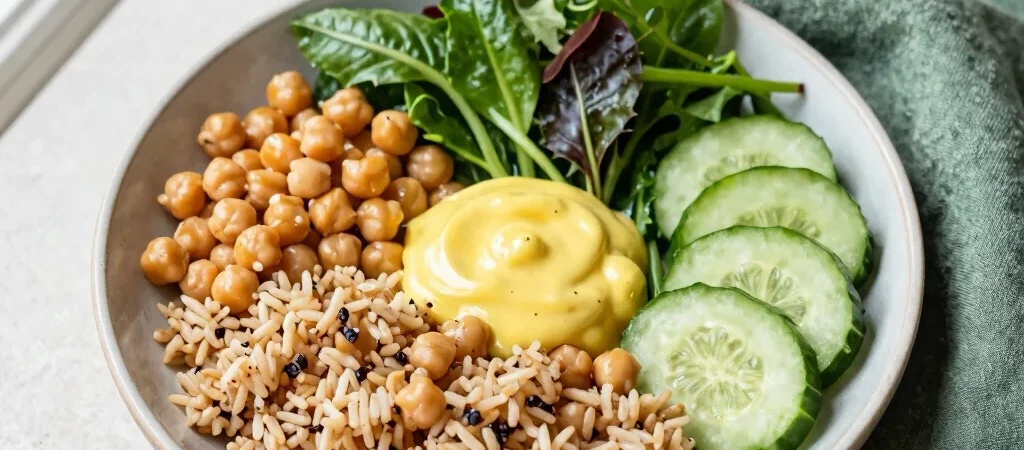
It’s noon, your next meeting starts soon, and the fridge has half a cucumber, leftover rice, and a can of beans. That’s enough to make a balanced lunch; the useful skill is knowing how to bring a few different foods together, not following a perfect formula.
Start With A Filling Base
Choose a grain or other hearty base, such as brown rice, whole-grain bread, oats, potatoes, or corn tortillas. Add a protein-rich food like beans, lentils, eggs, tofu, fish, chicken, or plain yogurt, depending on what you have and enjoy. Leftovers count: a scoop of last night’s rice can make lunch easier today.
Add Color And Contrast
Use fresh, frozen, or canned vegetables to add color, texture, and flavor. Try cucumber with canned chickpeas and rice, or warm frozen vegetables with lentils and a spoonful of salsa. A dressing, lemon, herbs, toasted seeds, or a little grated cheese can bring the parts together without turning lunch into a project.
Keep The Formula Flexible
You don’t need every food group in exact proportions at every meal. Dietary guidance varies by country, but public resources such as the USDA’s MyPlate and Canada’s Food Guide both offer practical ways to think about variety and balance. Use those as references, then adapt for appetite, culture, budget, and what’s actually in your kitchen.
A balanced lunch can be as simple as a bowl, a sandwich, or leftovers with a piece of fruit. NutriViva may use affiliate links in some articles; if you buy through one, we may earn a commission at no extra cost to you. We aim to keep recommendations useful and separate from nutrition guidance.